
Dolly or Hand Truck? Choosing the Right Tool for Heavy Items
Knowing how to use a moving dolly starts with picking the right type for the load. A hand truck suits boxes and tall, narrow items. An appliance dolly, which has built-in straps, suits refrigerators, washers and other heavy appliances. A flat furniture dolly suits sofas, dressers and other wide pieces. Whichever one you choose, the method is the same: load the item, secure it, tilt it back so the wheels carry the weight, and move slowly with a spotter.
The tricky part is that people use the word “dolly” for all three tools, so it is easy to grab the wrong one. This guide explains how the tools differ, which one fits which item, how to strap a load, how to handle stairs, and where DIY stops making sense.
Hand Truck, Appliance Dolly, or Furniture Dolly: What Is the Difference?
The three tools differ in shape, number of wheels, and how well they hold a load in place. Those three traits decide what each one is good for.
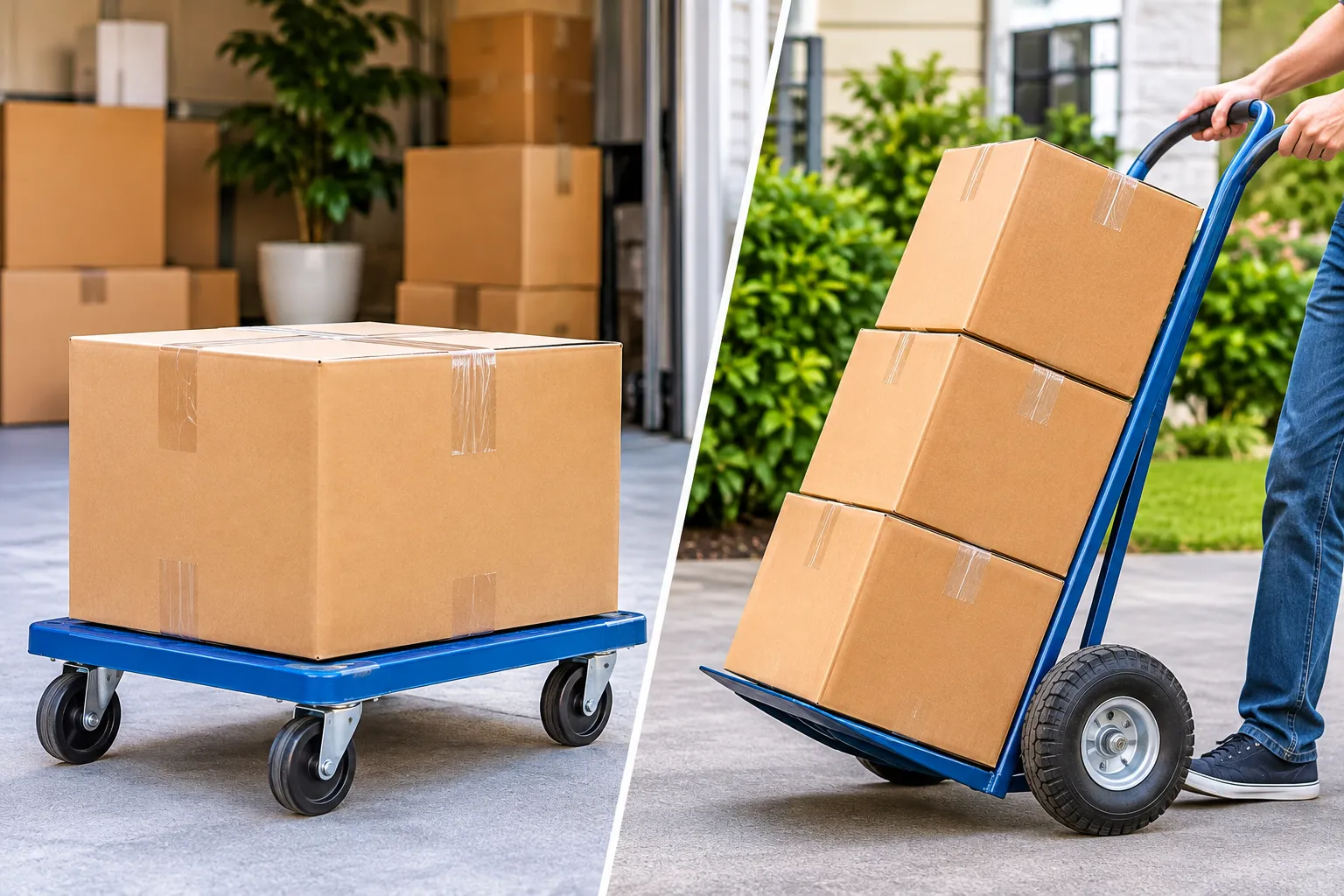
A hand truck, sometimes called an upright dolly, has an L-shaped frame, a tall handle, two wheels and a small ledge at the bottom. A dolly in the strict sense has a flat platform that usually sits on four wheels. According to a restaurant-equipment supplier’s buying guide, upright hand trucks are commonly rated from about 80 to 1,500 pounds, while appliance models run from roughly 250 to 1,200 pounds.
An appliance dolly is a hand truck with extras: heavy-duty straps, side rails and often rubber pads. The straps keep a tall, heavy object from sliding off, and the rails help it stay centered. A standard utility hand truck usually has neither.
A furniture dolly is a low, padded platform on swivel casters. You lay the item on top and push, so there is no tilting involved. It is slower to steer through tight spaces but very stable on flat floors.
Which Dolly Fits Which Heavy Item?
Match the tool to the shape of the load first, then check the weight rating. Here is a quick guide.
- Boxes and small tall items
Use a hand truck. Put the heaviest boxes at the bottom, keep the stack below chest height so you can see over it, and tilt the load toward the wheels.
- Refrigerators, freezers, washers and dryers
Use an appliance dolly with straps. These items are tall, top-heavy and expensive to damage.
- Sofas, dressers and large bins
Use a furniture dolly. Wide, bulky pieces ride better lying flat than balanced on two wheels.
- Many boxes at once on a flat route
Use a platform dolly. It carries more per trip, but it is harder to turn in narrow hallways.
- Safes, pianos and very heavy specialty items
Use equipment made for them, such as a piano dolly. Do not improvise with a general-purpose tool.
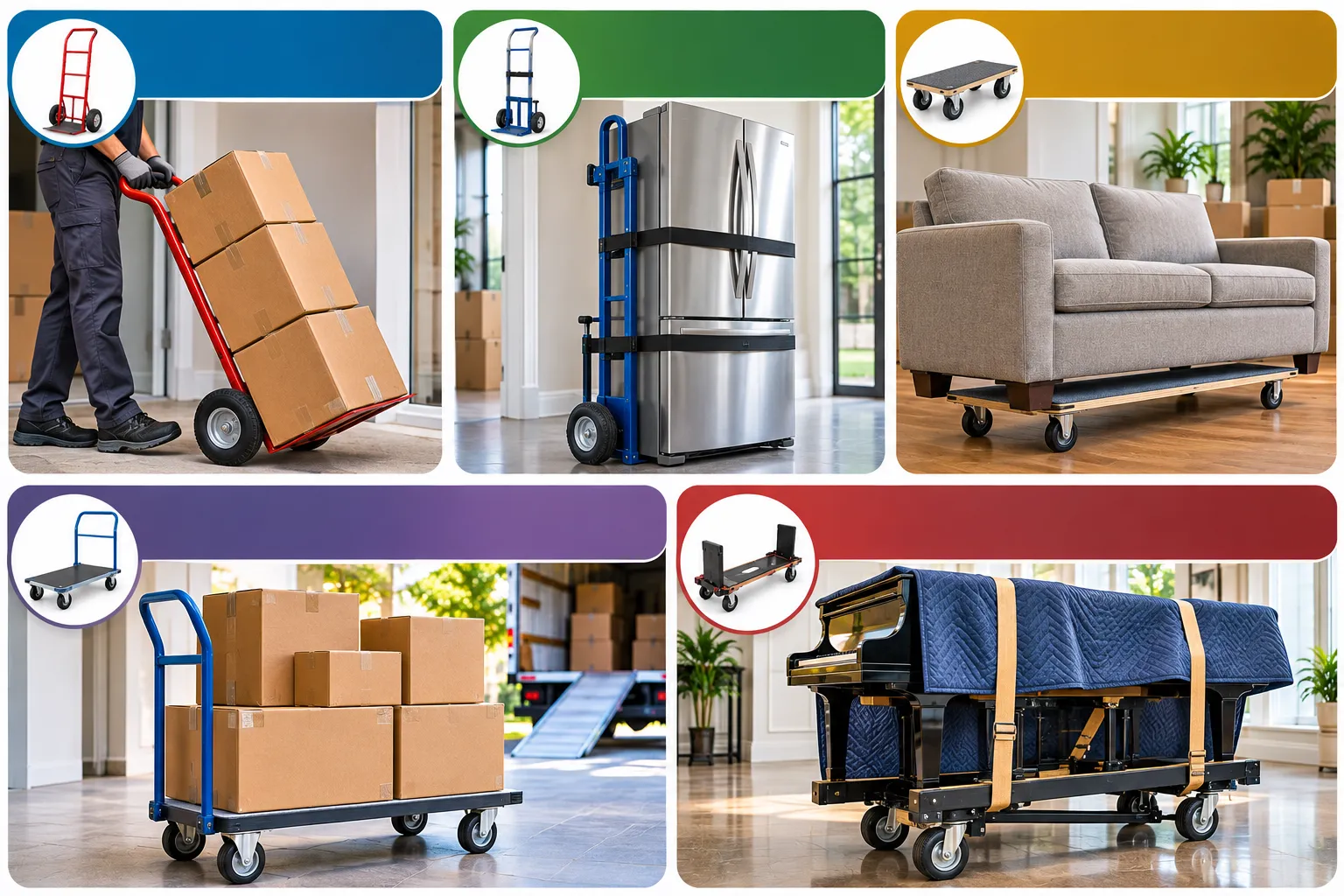
Here is a realistic example. Say you are moving a washer, a loveseat and about 20 boxes out of a second-floor apartment. The washer goes on an appliance dolly, the loveseat on a furniture dolly, and the boxes on a hand truck. Trying to do all three with one hand truck means more trips, more strain and a higher chance of dropping something.
How to Use a Moving Dolly Step by Step
The basic technique works for nearly any load: prepare, load, secure, tilt and roll. Taking each step in order prevents most of the mistakes covered later.
Prepare the path
Measure doorways, hallways and stair widths before you start. Clear the route and lay down cardboard or a runner to protect floors. Prop doors open so you are not steering with one hand.
Load the item
Roll the dolly up to the item with the handle facing you. Tilt the item slightly, slide the base or ledge underneath, and push it back until it rests against the frame. The item’s weight should sit low and close to the dolly’s axle.
Secure it. Strap the load before you move it. Even a short roll across a driveway can shift a heavy object.
Tilt and balance
Pull the handle toward you until the weight rests on the wheels, not on your arms. You should feel the load balance at a point where it takes little effort to hold. If you are straining, the item is sitting too far from the axle.
Roll, do not carry
Walk slowly, keep the dolly close to your body, and let a helper steady tall loads from the side. Go around corners in wide, gentle turns.
How to Strap an Appliance to a Dolly
Strapping keeps an appliance upright and in place, and it is the step people skip most often. Start by securing loose parts: tape doors shut, remove or tie down shelves and drawers, and coil any cord so it cannot snag.
Slide the dolly under the appliance, then run the strap around the body at a point that sits above the center of gravity, not at the very top. Cinch it tight enough that the appliance cannot shift when you tilt the dolly. If your dolly has two straps, use both, one higher and one lower.
If you only have a basic hand truck, ratchet straps or heavy-duty bungee cords can do the job. A ratchet strap holds far better, so use one for anything heavier than a few boxes. Pad any metal frame that touches the appliance with a moving blanket, since an unpadded frame can scratch the finish.
Using a Dolly on Stairs and Ramps
Stairs are where most dolly accidents happen, because the load can tip or run away from you in an instant. Go slowly and take one step at a time.
Keep a helper on the lower side of the load to guide it, and keep the dolly tilted back at about a 45-degree angle, as a major home-improvement retailer’s moving guide recommends for refrigerators. Let the wheels roll over each stair edge instead of lifting the whole load, and never stand where a slipping load would land on you.
For a full-size appliance on a flight of stairs, plan on at least two strong people. A third person to spot and manage the straps makes it safer. A stair-climbing dolly, which has a set of rotating wheels or tracks, can help with a single flight, but it still needs a trained operator and a sturdy staircase.
Ramps work well for loading a truck, but they need a gentle slope and a firm grip. Never push a dolly up a steep ramp alone. Use a helper at the top to guide it, and keep your hands on the frame, not the load.
Common Dolly Mistakes That Cause Injuries and Damage
Most dolly problems come from a handful of repeat mistakes: the wrong tool, an unstrapped load, overloading, and rushing.
- Using a hand truck for something too heavy or wide
If the item hangs over the sides or the wheels bow under the weight, switch tools.
- Skipping the straps
A heavy item that slides off a dolly drops fast and has nowhere to go.
- Stacking too high
A tall stack blocks your view and shifts your balance. Make two trips instead.
- Ignoring the weight rating
Check the rating on the frame or the packaging and leave a margin.
- Moving too fast
Speed on tile, gravel or a slope turns a minor wobble into a fall.
Injuries from this kind of work are common. U.S. Bureau of Labor Statistics data show that overexertion, repetitive motion and related bodily conditions caused about 946,000 injury and illness cases involving days away from work, job restriction or transfer in private industry across 2023 and 2024. That is the largest single category in the data.
When to Bring in a Crew Instead
A dolly reduces strain, but it does not remove the need for enough hands, especially for heavy items, long carries and multiple flights of stairs. A useful benchmark comes from the National Institute for Occupational Safety and Health. Its revised lifting equation sets a recommended weight limit of 51 pounds for a two-handed lift under ideal conditions, and that limit drops when the load is awkward, far from the body or lifted from a low position.
Think about that number the next time you tilt a 250-pound washer onto a dolly. Even with the wheels doing most of the work, someone is still guiding, balancing and catching the load at the moments when it matters most.
Signs that it is time to get help include a staircase with turns, a load over roughly 200 pounds, a narrow path with no room for a spotter, and a short time window to finish. In those cases, hiring labor-only movers with dollies and straps can be a practical middle ground: you keep your own truck and schedule, and a trained crew handles the loading, carrying and unloading.
If you stay with a DIY move, rent the right dolly for each category of item, ask a friend to act as a dedicated spotter, and plan extra time. Rushing is the most common reason a manageable job turns into an injury.
Frequently Asked Questions
What is the difference between a hand truck and a moving dolly?
A hand truck is an upright, L-shaped tool with two wheels that tilts a load back onto its wheels. A moving dolly usually has a flat platform and four wheels. In everyday moving talk, people use both words for either tool, so check the shape and the weight rating before you rent or buy.
Can I use a hand truck to move a refrigerator?
You can only if the hand truck is rated for the weight and you can secure the fridge with ratchet straps. An appliance dolly is the better choice because it has built-in straps and side rails. Always keep the fridge upright and use at least one helper, and two on stairs.
How do you strap an appliance to a dolly?
Secure loose parts first, then slide the dolly under the appliance and wrap the strap around its body above the center of gravity. Cinch it tight so nothing shifts when you tilt the dolly. If your dolly has two straps, use both. Pad any metal frame that touches the finish.
How do you use a dolly on stairs?
Take one step at a time, keep the dolly tilted back at about 45 degrees, and let the wheels roll over each edge. Keep a helper on the lower side of the load to guide it. Use at least two people for heavy appliances.
How heavy is too heavy for a moving dolly?
It depends on the model. Many upright hand trucks are rated between about 80 and 1,500 pounds, and appliance dollies between about 250 and 1,200 pounds. Check the rating on your specific dolly, leave a safety margin, and bring in more help if the load is awkward or the route has stairs.
A Simple Rule to Remember
Pick the dolly that matches the load’s shape, strap everything before it moves, and slow down at every stair and corner. Those three habits prevent most of the damage and most of the injuries.
Also read: How to Choose the Right Entry Door for Your Home
Before moving day, walk the route once with a tape measure and decide where you will need a second or third person. Ten minutes of planning costs far less than a dented appliance or a strained back.