The Chef’s Secret: How to Unlock Deeper Flavor in Cooking with Premium Soy Sauce
Introduction: Not Just Salt, Breaking The Rules with a Flavor Transformer
The common perception of soy sauce among many people is that it is just a salty dip for sushi. Or maybe a splash for stir-fry. The truth is that premium soy sauce is, in fact, one of the most useful tools in your kitchen. The matter of fact is that it’s not only limited to making Asian food taste better but it is also can be used to improve virtually all types of food from all cuisines.
The secret of this new trend is being revealed to more and more chefs and home cooks every day. The change that one experiences with regular soy sauce against premium soy sauce is remarkable. The latter adds a particular flavor that is termed umami. It also has the power of enhancing other ingredients. We will demonstrate this through the article which is going to show you the difference premium soy sauce makes in cooking the everyday meals.
Notes to Remember
- Brewing is Key: Premium soy sauce is left for a long time to ferment naturally. This results in multiple and very complex flavors. Low-end brands often apply quick chemical methods to create salt only.
- It’s a Flavor Amplifier: Besides soy sauce, the food that uses this condiment is going to taste more like itself. Your beef becomes “beefier” and tomatoes become “richer”.
- Expand to Non-Asian Cuisines: Add it to your western meals like stews and roasted veggies. You can replace it in dressing for salads. Because it adds depth without the “Asian” flavor.
- Read the Label: On the quality of premium soy sauce bottles should be simple. Among the ingredients: water, soybeans, wheat, and salt. Reject corn syrup or chemical additives bottles.
- Light vs. Dark: Light soy sauce is more versatile than dark soy sauce in general. Dark soy sauce, on the other hand, gives color and sweetness to your dishes.
What Really Is The “Premium” Soy Sauce?
Learning what makes soy sauce “premium” is the first step to better flavor. It’s not just about the price. It’s about the process, the ingredients, and the final taste. The first thing people should do to enjoy the taste of premium soy sauce in their daily dishes is to understand the features of soy sauce.
The Brewing Method: Tradition w/ Industrial Contradictions
The first most distinct feature is the production method of the soy sauce. The original premium soy sauce is produced traditionally by means of the natural fermentation method. That does not mean that it only involves soybeans, salt, and water – for months. Years can also be necessary. This lengthy procedure is what produces the magic. In fact, the fermentation process is essential to the development of flavor.
Our benchmark, the High-Salt Dilute Authenticity Brew™, is made with the old methods. This is the reason that it allows the formation of hundreds of different natural flavor compounds. The result is a sauce of amazing depth and complexity.
Most commercial soy sauces are made with a shortcut that is known as chemical hydrolysis. This method uses acid to break down soy proteins in just a few days. The resultant product is one that is harsh and linear. It’s very salty and lacks the rich flavors of truly brewed sauce.
read more : https://cubanribs.com/
Label Reading: What to Look For
The list of ingredients will be able to tell you about the soy sauce quality. The premium naturally brewed soy sauce must have a very limited list of elements. Water, soybeans, wheat, and salt should be found.
You should check for terms like “Naturally Brewed” or “First Pressing.” First pressing is the first and most flavorful liquid from the fermented mixture. Be cautious when the labels show “hydrolyzed soy protein,” “caramel color,” or “corn syrup.” These are the first signs of the chemically made or low-quality products.
The Sensory Difference: A Quick Comparison
A side-by-side taste comparison quickly reveals the true differences. Premium soy sauce is way far better than the standard version that only offers a flat experience. The difference is, therefore, an essential element of how premium soy sauce enhances flavor in everyday cooking.
| Attribute | Standard Soy Sauce | Premium Soy Sauce |
|---|---|---|
| Aroma | Sharp, almost chemical smell | Complex, malty, fermented scent |
| Color | Opaque, dark from added coloring | Clear, rich reddish-brown |
| Taste | Overwhelmingly salty, one-note | Rich umami, balanced salt, subtle sweetness |
| Aftertaste | Harsh, lingering saltiness | Clean, savory, and pleasant finish |
The Science of Flavor: How Premium Soy Sauce Actually Works
So, you just got yourself a bottle of premium soy sauce, what then? It’s time to learn how it actually makes your food taste better. It doesn’t only play the role of a salty or soy-like flavoring ingredient. Instead, the science behind its operation is mind-boggling. It teaches that a few drops can transform a dish to a different level.
It Adds Koku and Umami: The Foundation of Savory Depth
You may be familiar with umami, the fifth basic taste. It’s a very deep, savory flavor that you can find in food like the aged cheese, mushrooms, and seared meat. Soy sauce, on the other hand, is a natural source that is full of glutamates. These substances that give it the umami taste.
However, the premium soy sauce also contains something called Koku. According to Japanese tradition, it means the feeling of fullness and richness and complexity of flavors. It is not a flavor as such. What it does is to make all the other flavors in a dish feel fuller and more satisfying. This quality is the result of long, slow fermentation.
It’s a Flavor Amplifier: Making Ingredients Taste More Like Themselves
This is arguably the most powerful of all secrets hidden in premium soy sauce. The natural compounds in it don’t merely have a unique taste. They, in fact, work together with the taste receptors located on your tongue. The net effect is that you become more sensitive to adding other ingredients in the recipe.
This explains why a splash of premium soy sauce makes the beef in the stew taste “beefier.” In the same way, tomato sauce enhances the flavor of tomatoes that are more sun-ripened and roasted by a few drops of the product. It serves as a flavor amplifier. Your food becomes a more excellent version of itself.
It’s a Catalyst for New Flavors: The Maillard Reaction and Caramelization
Premium soy sauce is a fantastic ingredient for developing color and texture levels as well. It’s made up of amino acids and tiny amounts of natural sugars that develop during fermentation. When they are heated, these compounds work miracles.
Hence, they become the catalysts of the Maillard reaction. This chemical process is the creator of that mouth-watering browning on grilled steaks, roasted chicken, and sautéed vegetables. Lightly coating your food with premium soy sauce will help you achieve even deeper colors. The sauce will give you a beautiful roasted depth of flavor. It also caramelizes when it’s used in glazes, forming the perfect crust of sweetness and salt.
Beyond the Wok: Cooking Casual Western Meals with Premium Soy Sauce
The biggest rookie mistake is relegating soy sauce strictly to Asian recipes. What a wonder if you use it as a top secret ingredient in the day-to-day meals of western cuisine. Some of the ways we utilize high-quality light soy sauce in our operations have turned out to be incredibly effective.
For Soups, Stews, and Sauces: The “Umami Bomb”
- Technique: Unveil a new secret ingredient with just one or two teaspoons of premium light soy sauce! In your next pot of bolognese, chili, or beef stew, pour it when you mix the other liquids.
- Result: You will find that it doesn’t taste like soy sauce at all. Getting back to where it was: the sauce will actually have a hidden layer of savory depth. So, the sauce will appear to be more aged and developed than it actually is. In this case, it would be a perfect example of premium soy sauce enhances flavor in everyday cooking.
For Roasted Meats and Veggies: The “Browning Booster”
- Technique: Before throwing it into the oven, toss mushrooms, broccoli, or carrots with olive oil and a light splash of soy sauce. You can also coat a whole chicken or pork loin with it before roasting.
- Result: You will end up with perfectly caramelized crusts and beautiful, deep brown color that is so savory. The hidden complex flavors of the vegetables and meat that are achieved cannot be done by simple salt and pepper.
For Salad Dressings and Vinaigrettes: The “Flavor Balancer”
- Technique: Stir just a few drops of premium soy sauce in a basic balsamic or red wine vinaigrette.
- Result: This does a great job to balance out the sharp acidity of the vinegar. It also assures that all the flavors mix together. This results in a more cohesive and sophisticated flavor to the dressing. With the help of experts, we will show you How to use soy sauce in unexpected but successful ways by creating more dynamic dressings.
For Finishing and Drizzling: The “Savory Garnish”
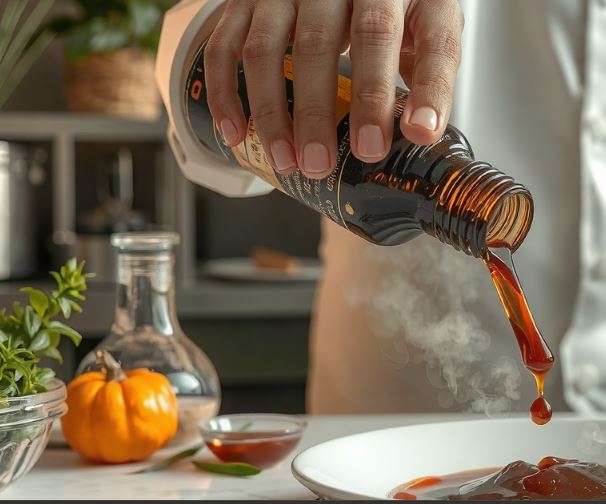
- Technique: It can be used as a kind of exquisite finishing oil. Just drizzle a tiny bit on top of eggs, avocado toast, or grilled fish just before serving.
- Result: This will give your dishes a final pop of clean, savory flavor. Besides, the addition of soy sauce will make your dishes brighter and elevate them. It will be that extra bit that everyone will want to know your secret about.
Choosing Your Weapon: Light vs. Dark and When to Use Each
A casual stroll through the supermarket aisle in 2026 will succor the different types of soy sauce that are premium. The two most popular are light and dark. To get the desired result, it is necessary to know the differences.
Premium Light Soy Sauce (or “Regular Soy Sauce”)
This is your all-purpose workhorse. It’s thinner and lighter in color. But it’s actually saltier than dark soy sauce. Its main job is to add clean, savory umami flavor. As experts on Chinese cooking explain, light soy sauce is the primary choice for adding savory flavor.
- Best For: General seasoning, stir-frying, marinades, dressings, soups, and as a dipping sauce. If you only buy one bottle, this is the one to get.
Premium Dark Soy Sauce
The premium dark soy sauce is the aged version of the soy sauce. It normally contains some molasses or caramel. This makes it thicker, darker, and less salty than light soy sauce. Its flavor is richer with a hint of sweetness.
- Best For: Its main job is to add color, deep, and rich flavor to your food. You can use it to braise meat like red-cooked pork, in stews, and to add beautiful mahogany color to noodles. Use it in moderation because a little bit can make a big difference.
For home cooks/switchers, the initial point would be to explore an all-purpose, high-quality foundation and the best way to do that is the range of an Authentic Chinese Soy Sauce Manufacturer. It’s interesting to see that you can choose not only expert-crafted light, and dark but also low-sodium varieties.
Selected Questions (FAQ)
Can I add premium soy sauce to sweet dishes like desserts?
Yes, but you should use it in a very small quantity. A dash of it in chocolate sauce or caramel can enhance the flavor and also, balance the sweetness. It works much like a pinch of salt does. It adds surprising depth without tasting savory.
Is it still considered premium if “low sodium” soy is used?
Yes, it can be. The premium low-sodium soy sauce is made in a traditional way of brewing. The salt is removed after fermentation is complete. Some cheaper versions are just regular soy sauce which is just diluted. Always look for “naturally brewed” on the label to confirm the quality of the product.
How do I maintain my premium soy sauce flavor and should I store it properly?
Refrigerate it after you open the bottle of premium soy sauce. The lower temperatures slow down the process of the oxidation which may damage the delicate aromas and complex flavors. This is why refrigerating it will keep the flavor intact for a longer time compared to pantry storage.
Does using premium soy sauce result in all food tasting “Asian”?
Absolutely not. This is a widely held misconception. When it is used as a background flavor enhancer in small quantities, it will not impart a distinctly “Asian” flavor to your food. The description of our guide is that it will just make your bolognese, chili, or roasted chicken richer and more delicious.
Is there a crucial difference between Chinese and Japanese premium soy sauce?
For real, yes! Generally, Chinese soy sauces are brewed with a higher percentage of soybeans. This is what makes them saltier and very intense. On the other hand, Japanese soy sauces or shoyu have a higher ratio of wheat. Therefore, they have a sweeter, more aromatic, and more delicate flavor profile. Both are excellent, but they serve slightly different purposes in cooking.
Conclusion: Transform Your Cooking in A Single Track, At A Time
Upgrading from standard, chemically produced soy sauce to premium, naturally brewed sauce is one of the simplest changes a home cook can make. It’s also one of the most impactful. It’s a small investment that pays off with huge flavor dividends. You now understand how premium soy sauce enhances flavor in everyday cooking. We encourage you to try one of the techniques from this guide tonight. Discover the delicious difference for yourself.